Saturday, October 31, 2020

Register today for RootsTech Connect


Every day, more and more people are discovering their family history and making connections with family past and present. 

This coming year, RootsTech is making that even easier for all of us with RootsTech Connect. This will be a FREE, international, and ONLINE conference for people to connect with their family history wherever they're from and wherever they live.

How do you join in on all the fun this year?

1. Put RootsTech down in your calendar now for 25-27 February 2020!

2. Learn more about RootsTech Connect at RootsTech.org

3. Register today here

4. Watch this inspirational video and get psyched about the conference!

5. Stay tuned for more updates here at the Orthodox Genealogist as all the exciting news on speakers, events, and activities are shared with us!

*****

Have you been to RootsTech before? How excited are you that it'll be FREE this year?!

Your ancestors deserve the best researcher, the most passionate story-teller, and the dignity of being remembered. So let's encounter your ancestors through family history and remember the past made present today!

Thursday, October 1, 2020

Connections Experiment: Wales

Back in May 2020 - which feels like forever ago - I had the opportunity to participate in a 21 Day Family Connections Experiment. The purpose was to connect with family history, connect with family, and to experience how this changes our lives in real time.

It was a great experience and that's why I'll be participating again this month for three weeks. You can join me by going to the Family Connections Experiment website, scrolling down to "Join" and click "I'm in!" This will lead you to register and to take a quick survey.


Once you've joined the experiment, you'll want to choose a plan to follow for the next three weeks. I'm going to do the "Cultural Connections Plan" because it's right up my alley. I love learning about cultures and traditions that are new to me. And what better way to connect with my ancestors than to learn about their traditions and their culture?

Which homeland will I be learning about these three weeks? Wales! My surname is Welsh - Williams - and it means "son of William." Though, I suppose it's an anglicized version of "ap Gwilym." You can learn more about Welsh naming traditions by clicking here.

Why do I want to learn more about Wales? Honestly, it came about rather unexpectedly. I was watching The Crown on Netflix and I saw a spectacular episode titled, "Tywysog Cymru" (meaning "Prince of Wales" in Welsh). I loved how The Crown gave a voice - literally - to the Welsh language and recognition of the ancient culture and history of the Welsh people. Much of the episode was in the Welsh language, which gave me an opportunity to hear Welsh for possibly the first time. Have you heard Welsh spoken? 

So guess what I did next? I signed up for Duolingo's Welsh language course for free on the Duolingo app! And I'm now on day 23 of Welsh learning! I know, I can barely believe it either...

I'm certainly well along now on a journey of discovery of my Welsh roots!

*****

Well, y'all, that's all for now. I hope you'll consider joining me on this 21 day Family Connections Experiment! Which plan is your favorite? If you choose the Cultural Connections Plan, which homeland will you connect with for these three weeks?

Until then, I'll be here learning about all things Wales (Cymru) and Welsh (Cymraeg), connecting with my ancestors and to their homeland!

Your ancestors deserve the best researcher, the most passionate story-teller, and the dignity of being remembered. So let's encounter your ancestors through family history and remember the past made present today!

Thursday, August 27, 2020

Free Webinar on Virginia Research

Going to conferences to hear from other genealogists is a real privilege. I learn so much from their experience and their passion. It's also a joy for me to share my passion by getting to speak to groups about genealogy and family history! But what is a genealogist to do with the limitations due to COVID-19?  Well, thanks to the determination and ingenuity of genealogists everywhere, along with the help of some technology, there are a lot of great new opportunities to connect virtually.

Friday, August 28, at 8 pm EST I'll be giving a *FREE* webinar hosted by our friends at VIVID-PIX. It'll be a fun night getting to talk about my home state, the Commonwealth of Virginia! Just click here to register for the webinar.

My topic

Meet Virginia: Best Kept Secrets for Researching the Old Dominion

Do y'all have roots in Virginia? In this webinar, we'll get to know the beautiful Old Dominion and discover the best kept secrets of Virginia research. Explore Virginia's idiosyncrasies, identify available records (in person and online), and see examples of genetic genealogy at work for Virginian descendants.

About VIVID-PIX

Who - or what - you might be asking, is VIVID-PIX? The VIVID-PIX software restores old photos, slides, and documents with beautiful results. I'll be sharing some photos they've restored of mine in my presentation, but here's one of my favorites.

It's a photo from about 1976 of my Vaughan family reuniting at the old family home in Darvills, Dinwiddie County, Virginia. It was one of the few times my grandmother returned to her childhood home as an adult. And there she is, third row from the top all the way to the left. But the photo has a yellow glow about it.


Here's the same photo with the help of VIVID-PIX.


Whoa, right?! The sudden realization dawns that not everyone was wearing yellow! Now, if you're ready for some more ah-ha moments relating to Virginia research, you know where to go!

*****

I really hope y'all will join me tomorrow, Friday August 28th, at 8pm EST! If you can't make it at that time but you're still interested in watching, fret not, y'all! We're recording the talk and it's available for a 30 day rental for only $1.99. To register, just click here!

Do you want to learn more about Virginia and the best kept secrets for Virginia research? I hope you'll join me!

Your ancestors deserve the best researcher, the most passionate story-teller, and the dignity of being remembered. So let's encounter your ancestors through family history and remember the past made present today!

Wednesday, August 26, 2020

Exciting New Photo Tools at MyHeritage

At this point in 2020, we all need a pick-me-up. Am I right or am I right?

Well, our friends over at MyHeritage have delivered just we the doctor ordered. Something that we can do from the comfort of our homes and that will keep us from being bored. Oh, and it involves family history, so it's got to be good! 

MyHeritage has two new photo tools that help us look at old family photos like we're seeing them for the first time. And until September 10th, you can restore and colorize as many photos as you'd like - for FREE - even without being a MyHeritage subscriber! If you aren't already clicking away at the MyHeritage page, and maybe you need to be sold a bit more, read on as I share some of the success I've had using their tools.

MyHeritage Photo Enhancer

The MyHeritage Photo Enhancer is amazing. It takes those blurred faces in old photos and crisps them up as if they were taken yesterday. I don't know how they do it - honestly it looks like magic - but who am I to complain? Look at what it did!

First, this is a photo of my beautiful great-grandmother Mimi - Gertlie Edgerton Brooks. I wrote about her here: Mimi & Pop. Here are the results after putting two of these photos through the Photo Enhancer.

I had noticed before how much my mom looks like Mimi, but WOW! This photo being crystal clear just made these details pop!

Here's a detail of my Pop's face from the same blog post I shared above. 


Now check out what MyHeritage Photo Enhancer did to bring Pop to life!


I love this tool, y'all!

MyHeritage In Color

The next tool that's new to MyHeritage and that's free and unlimited to all until September 10th is MyHeritage In Color. After you've enhanced your photos, you can add color in a matter of seconds. Or if you already have crystal clear photos, but want to see them come to life, go straight to this tool!

Here's an enhanced and colorized photo of my great-grandparents at Blandford Cemetery in Petersburg, Virginia (see the original at Mimi & Pop).


I just love how they pop out of the photo now. The trees and grass are green around them but they're still stealing the show. Beautiful!

And then check out this photo of another of my great-grandmothers, Mary Susan Wooldridge Williams, with her father, her siblings and their families. The photo dates from about 1912 in Powhatan County, Virginia, and I wrote about it here: A Wooldridge Family Photo


This is after enhancing the photo and colorizing it. Some of the figures just pop off the page, don't they!? Sadly, my great-grandmother's face is simply too distorted in the image to be restored. But her brother (all the way to the right) is amazingly clear now.

*****

Not only are these two MyHeritage tools super easy to use, but they're FUN to use. And for the next two weeks, until September 10, they're free and unlimited for everyone. So what are y'all waiting for? Go have some fun and share your results too!

Have you used MyHeritage for your family history before? While you're checking out these tools, check out the rest of what they can offer you and your genealogy needs!

My ancestors - and your ancestors - deserve the best researcher, the most passionate story-teller, and the dignity of being remembered. So let's keep encountering our ancestors through family history and remembering the past made present today!

Friday, May 22, 2020

Connections in Quarantine


In Virginia, we've been in a state of emergency since March 12th and under a stay at home order since March 24th due to COVID-19. With limited access to nearly everything - including people - how was a connector like myself to stay connected? Genealogy and technology!

Here are some of the things I've been up to during this time that have helped keep me connected.

#ABatchADay Challenge


At the end of April, I started a seven-day challenge to index records on FamilySearch. It was a great experience! I had never indexed records before - though as a daily online researcher, I'm always reaping the fruits of indexers' labors! So I decided to jump in and have a go at indexing.

I worked on records of the U.S. Colored Troops from during the Civil War. Each day, I would index at least one batch of records. A batch is a certain amount of records that can be indexed in 20 to 30 minutes. In my case, it took less time than that. The military records that I worked on will be searchable soon for those seeking their ancestors. It was super simple, and the learning curve was fast to get over. I recommend everyone try to index a batch!

In just one week, our group indexed over 11,000 records! To get your feet wet with indexing, head over to FamilySearch's indexing page by clicking here.

Connections Experiment

Starting May 1, I participated in a daily experiment to make more connections to family past and present. It's called the Family Connections Experiment. I wrote about the plan I chose and my first day's reflections on my post A Journal, A Timeline, and Family Connections. I thought it would be a helpful exercise to reflect some on who I am, and what makes me, me. And I was right; it as a great experience!

Each day, usually in the evening, I would sit down at my dining room table, and scroll down to the next prompt on the website. I loved the surprise of what that day's prompt would be, and how I might write about it. I chose to journal my reflections, and then share something of what I wrote on my Orthodox Genealogist Facebook Page, and on my Twitter account @SosonKyrie.

Here are some of my reflections on what I've learned or have greater clarity on:

  • My identity is wrapped up not only in my experiences and interests, but in the people who came before me. My family isn't perfect, but I am theirs and they are mine.
  • My parents did a great job at cultivating my sister's and my interests and skills. And they did this because we were and are their prized possession
  • I have been blessed with great experiences - school, work, and travel - and with great people in my life - mentors, friends, and family. 

Some highlights from quarantine 

While isolation is...well...isolating...it doesn't have to be completely without connection. Besides the daily genealogy research I've been doing, and the daily reflections with the Connections Experiment, I've made sure to stay connected to family and friends through technology.

I FaceTimed my mom on Mother's Day, I've had virtual happy hour, virtual hangouts, and virtual game nights all during this time of quarantine.


My favorite board game is Settlers of Catan. During my time at the Greek Orthodox seminary in Boston, we played a lot of Catan. During our senior trip to Greece, we played a lot of Catan! So it seemed only meet and right to revamp our tradition by playing virtually - thanks Zoom! - during our time in quarantine. So far, we've played twice. The second time we played, I even won y'all! I was in shock.


On the last day of the Connections Experiment, I was interviewed by Sydney Orton on Facebook Live. Our discussion "Grappling with Difficult Discoveries" is available on the Connections Experiment Facebook page. You can watch the video by clicking here

We talked about how common it is for people to make difficult discoveries in their family history. Everyone is going to react to the same sort of information a bit differently, so we talked about some of the most common challenges a person might face:
  • Parentage - unknown parentage, adoption, circumstances surrounding their conception
  • Infidelity - DNA matches can reveal moments of infidelity or children born out of wedlock
  • Mental health & addiction - records can reveal our ancestors were in jail, hospitals, or died by suicide or liver failure. You can read more about Mental Health, Addiction, and Genealogy.
  • Race & ethnicity - DNA results can reveal unexpected or missing ethnic groups
Healing is possible through family history research, but trauma can also be relived or caused through unexpected discoveries. The best balm that I can recommend is connection - to the genealogy community, to mental health professionals, and - if relevant - to your spiritual leaders. 

*****

I value all of my relationships, so staying connected to my family and friends is super important. And I love making new connections to newly discovered family through genealogy. One of the coolest parts about genealogy conferences is that we can make new friends who are just as passionate about family and genealogy as we are. 

It's awesome to see that even during quarantine and the challenges of COVID-19, we can stay connected to others and find glimmers of hope each day.

How are you staying connected these days? Have you faced a difficult discovery recently, and if so how are you getting support?

My ancestors - and your ancestors - deserve the best researcher, the most passionate story-teller, and the dignity of being remembered. So let's keep encountering our ancestors through family history and remembering the past made present today!

Tuesday, May 5, 2020

Their Prized Possession


It's Day 5 of the Family Connections Experiment! The About Me plan's prompt for today is "picture."

On 25 August 1990, my parents took me to Midlothian Masonic Lodge 211 to get my Child Identification Card. 

The trip to Masonic Lodge 211 involved getting fingerprinted and having this adorable photo taken of me to identify me with. I'm wearing a yellow-green tank top and multi-colored shorts. My hair was still Hite-family-blonde and my cheeks squeesibly-chubby. Behind me reads, "Prized Possession."


As a little kid, my hair was bleach-blonde. My dad loved - and still remembers with pride - that I had a mullet: spiky on top, with a long rat tail in the back. One day in March 1989, when I was 18 months old, I got a hair cut. I guess it was just to get the hair off of my ears, but my parents kept some of that hair as a keepsake. It's like they knew I wouldn't always have blonde hair - or much hair at all for that matter - and they wanted to remember this moment forever.


In September 1987, I was born. I was a nearly bald, very chubby, Chippenham baby. You see, I was born at Chippenham Hospital in Richmond, Virginia. My dad was sure that the German doctor who delivered me had somehow broken me, leaving me with a cone-head. Thankfully the 1993 film had yet to come out...and even more thankfully, my head went back to normal!

*****

Going through old mementos of my childhood isn't always a happy experience. Many memories are best left in the past. 

But these pictures remind me that my sister and I were our parents' "prized possessions." Whether they were doting over our art, admiring our mud-pies or the holes we dug out back, or the birds I could identify...our parents cultivated and praised our interests and talents.

And they - like unbeknownst family historians - preserved like time capsules the evidence of their most prized possessions: their children.

My ancestors - and your ancestors - deserve the best researcher, the most passionate story-teller, and the dignity of being remembered. So let's keep encountering our ancestors through family history and remembering the past made present today!

Saturday, May 2, 2020

I Am Theirs and They Are Mine


Day 2 of the Connections Experiment had me reflect about myself. Who am I?

The prompt for today reads:
Write about how you would describe yourself. Physically? Mentally? Spiritually? Personality? Tip: It’s ok to talk about how you are feeling mentally. Think of the healing that can happen if you share your depression or anxiety or what you worry about. Healing can come for you and for your descendants.
So I put pen to paper and reflected on how I see myself today. Here's some of what I wrote, which I hope will prove relatable, familiar, or at the very least...interesting?

Self

I don't like talking about myself. I like talking about my interests, my family, my experiences, but not myself. Describing who "Sam is" is a challenge because in the attempt is the lingering feeling that others might not see me the same way as I do. Perhaps it's fear or insecurity. It's easier to ignore the nagging self-criticism or perhaps to succumb to it. But for today, I'm laying that aside.

Physically - I ran 5 km today with a friend! I'm not as in shape as I was in January when I ran every day, but I always feel refreshed after getting fresh air and some exercise.

Mentally/emotionally - It depends on the day! Some days, during this COVID-19 mess, I feel isolated and stir-crazy. Other times, I enjoy the quiet and simplicity. I miss the freedom of going to a friend's house, of giving hugs, of getting to hold my friends' babies, of going to cafes and breweries, even crowds. I miss going to court houses and the Library of Virginia to do research.

I'm also grieving events that are postponed: weddings, ordinations, baptisms, reunions.

And then I remember gratitude. I'm not sick. I have a job. I live in a great apartment in a beautiful city. I'm paying off debt and I have food. I'm not going without.

Spiritually - Today, I read several chapters of the Book of Acts outside in the sunshine. My prayer life isn't at 100%, but Christ is risen! This is my joy and my hope.

My personality - The more I discover my family history, the more I see my parents and their family in me.

My laugh, my love for people, my intensity, my compassion. All of these are in my DNA. My gift for teaching is a gift from God. But how I speak is a gift from my grandparents.

I'm an extrovert (I'm an ESFJ & a 2 on the enneagram) yet I love my time alone to recharge. I'm intense like my parents: I love intensely, I care intensely. I laugh like my Memaw and giggle like my Grandma Nora. I'm eccentric like my dad and Uncle Art, and a bit hoity-toity like my Uncle Fred. I'm an open book and I have an open home like my Aunt Judy. I'm a talker like my Granddaddy and my Pawpaw. And I'm so much like my sister, it's a wonder we're not twins.

I am my family - the best of them and the worst of them. But they're wonderfully mine. And I am theirs.
*****

Reflecting on who I am - in light of who my family is - is a life-giving exercise. I'm reminded that no person is an island and that the best in me come from them.

How would you describe yourself? Do you see your family in yourself?

My ancestors - and your ancestors - deserve the best researcher, the most passionate story-teller, and the dignity of being remembered. So let's keep encountering our ancestors through family history and remembering the past made present today!

Friday, May 1, 2020

A Journal, a Timeline, and Family Connections


As a genealogist, you might expect that I'd always be excited about family history, genealogy, and family. That maybe I come from a perfect family or that my research turns up nothing but cheery stories.

But as with any vocation, profession, or hobby, the passion may wane at times. And I am passionate about family history not because I come from a perfect family, but because I believe that family history can be healing and transformative for imperfect families like my own. At certain times, it may be harder to want to dive deep into one's family history though. In times of grief, or in particularly busy times, or perhaps during a pandemic, we might find ourselves in a bit of a lull.

Like exercising or studying, sometimes we need accountability and community to get us moving!

So I'm happy to let you all in on the Family Connections Experiment! This 21 day experiment aims to help us all explore "the psychological benefits of daily connections with family, past and present." It begins today - 1 May - and lasts for three weeks. After taking a quick survey, you pick a plan from the Family Connections Experiment website, and each day you'll participate through the daily prompts given from your plan.

The goal is that through these simple and engaging daily activities, you will invest more time in creating family connections and will notice a positive improvement to your mood and mental health.

Today, I'd like to reflect on what I've been up to with Day 1 of my Family Connections plan.


After checking out the many awesome plans available - including a choose-your-own-adventure type build your own plan - I chose "The About Me Plan." 

I decided to go with this plan because I'm already a daily genealogy researcher. I'm on track working on DNA matches, adding new cousins to my tree, and researching brick wall ancestors. 

But do you know what gets left behind when you're always digging so far back in your tree? You forget to tend to the branches a bit closer to home. I'm guilty of not engaging enough in my own story, connecting with my living close family, and strengthening these connections more regularly. This plan provides simple prompts that will help me put words to memories, to tell the story of my life in a way I might not have thought about before. And, it will help me connect with my family in the process.


Each day, there's a different topic to engage, a new aspect of self or family that I can write about.


Timeline

The Connections Experiment website provides the following as today's prompt:
Timeline: Vertically down the page (paper or electronic) write each year you have been alive on each line. Then go back and add important events that happened in your life those years. You aren’t writing the story but writing a phrase to capture the memory.
As you can tell, this is at once very simple and complex. It's a timeline of one's life - so the older you are, the more years you'll need to write about.

There are all sorts of ways that you can engage with this experiment - you can journal, blog, type everything up on your computer, post on social media, discuss your responses with family and friends. I decided to journal - and then to let y'all know how everything's going here!

The Journal

I love to journal. I've kept journals since college, and even during middle and high school I would write free verse, spoken word type poetry as a means of self-reflection and healing in times of stress and anxiety. So I truly believe in the power of catharsis, of speaking truth to feelings and watching as the jumble of thoughts take form and unravel into some semblance of sense. It was a natural decision, then, to want to write my daily reflections in a journal.

In 2013, my aunt Judy - my JuJu - gave me a bound journal with the Footprints poem on the front. Her gift was in honor of my graduation from seminary at Holy Cross Greek Orthodox School of Theology. On the first page, she wrote me the sweetest note:
Dear Sam,
Congratulations! You're just too smart!
This journal is for you to put your special thoughts and prayers in. I personally write prayer letters to God, as so not to forget all the points I want to bring up to him. That way I don't leave anyone or thing unspoken.
I pray here:
Dear God, Continue to guide and bless my Sam. In your blessing I pray, AMEN.
God, be with you Sam!
I Love You!
Judy
My beloved aunt Judy passed from this life on 31 August 2016 after years of illnesses - from lupus, to kidney and hip transplants, to cancers too numerous to count. After her passing, I have struggled to grieve her loss. I have in many ways ignored grief as if through ignoring her loss I might not have to feel her absence. But each time I read her words, or see a photo, I remember her laugh, her smile, her love.

So each time I remembered the journal Judy gave me, I would balk at using it. How could I risk messing it up? What prayers or special thoughts were worthy of her journal?

When I was reflecting on where I would add my memories and thoughts in this experiment, I came to a sense of peace that this journal that my JuJu gave me...this was precisely the journal I needed to use. She would want me to use the journal to connect with family, to reflect on my own life, and to stop holding on to something without using it!

My reflections from Day 1

I'm only 32, so a yearly run-down of my life shouldn't take so long right? HA!

It took me a few hours - not going to lie. I wanted to recall the various important moments of my life: when close family members died, when others were born, when I was in which grade at which school. I wanted to remember when I moved where, and some of the major world events in my life.

So what have I learned from writing my timeline?

  • I was in speech therapy much longer than I remembered - from 3-5 years old. After struggling with consonants and needing my parents to interpret my speech, it's all rather ironic today that I had a problem speaking! 
  • I divide my life into sections: 0-9 years old, 10-13, 14-17, 18-21, 22-26, 27-32.
  • I too often allow myself to define my life by one or another period...but I have progressed so much beyond a turbulent childhood. Sometimes, you need to see yourself in a timeline to see that you're no longer an 8 year old. I mean, I can know something intellectually - but seeing it is another thing.
This is only Day 1, y'all! There are 20 more days of simple reflections that I really hope will build upon this great foundation of writing out my life in a timeline.


*****


I'm already glad that I signed up for this Family Connections Experiment. I want to encourage you to sign up too! In the challenging times we find ourselves in, it can be difficult to want to do anything. You might not want to sign yourself up for "one more thing" to do, another thing to put on your to-do list only to feel guilty if you don't keep up with it.

But I don't want y'all to approach this experiment this way! See this as an adventure, as an opportunity to make connections, to get out of your own head and to reach out. If you - like I did today - find things in your reflections which bring up painful memories or trauma, reach out to someone. Speak to someone in your family, a friend, a therapist or counselor, a faith leader, connect to the Family Connections Experiment page on Facebook, or contact me! We want to create community, and to support one another in building connections.

How has your first day of this Family Connections Experiment gone? What have you learned?

My ancestors - and your ancestors - deserve the best researcher, the most passionate story-teller, and the dignity of being remembered. So let's keep encountering our ancestors through family history and remembering the past made present today!

Saturday, April 25, 2020

Genealogy Connections: RootsTech & DNA Day


Well, 2020 has certainly proven it'll be one for the books, hasn't it, y'all!?

As COVID-19 continues, social distancing has ironically become the thing that unites the world. For introverts, it's perhaps a welcome respite. For extroverts - like myself - it can be isolating, bleak, a forced exile from friends, family, and hugs. Yes, hugs - remember those?

But for genealogists, our time of forced separation is reminding us all what family history is really about - the people. Our ancestors were people: some saintly, others we might like to forget. As we connect to our ancestors, as we connect to their stories and find strength in their perseverance, we connect to the best in the human spirit.

Right before COVID-19 really hit the United States, I was fortunate to connect with some of my best genealogy friends and colleagues. And since today is also National DNA Day, what better day to hunker down and share with you my experience this year at RootsTech 2020!? So sit back, relax, and join me on a trip to Salt Lake City, Utah!

RootsTech Connections

This year - RootsTech 2020 - was my third time attending RootsTech. If my first conference in 2018 was a whirlwind, and my second year in 2019 was like a reunion, then my third year was certainly like a homecoming.

Over 32,000 people were in attendance, from 55 countries, and 49 states. That's a lot of people! Oh! And over 20,000 youth from the Church of Jesus Christ of Latter-day Saints arrived for an event Wednesday night. How's that for connections?!


A lot of fun things happened this year. For starters, it was the 10th anniversary for RootsTech! And as part of our celebrations - with the theme "The Story of You" - I was interviewed for promotional materials. The first video from the interview was shown on the big screen at the end of the week! How cool is that!? [Check out the photo at the top of the page - and view the video here!]


There was a great lineup for speakers this year. Of our keynote speakers, I interviewed Leigh Anne Tuohy, David Hume Kennerly, and FamilySearch CEO Steve Rockwood. I also got to sit down with FamilySearch's Thom Reed to discuss new initiatives for the African American community.


I loved hearing the stories that each of our keynote speakers gave. I was particularly struck with just how much of history David Kennerly has experienced first hand as a photographer. From war to the Oval Office, he's seen it all.


But it wasn't all about celebrities and interviews. Behind the scenes are great folks like these fellow RootsTech Ambassadors who like me reported on classes, keynote addresses, and all the fun things RootsTech brought us each day.


I even got to see friends from RootsTech 2018 that I hadn't seen in two years! How fun is that?!


And then there's the many many family members spread out all over! It's always a pleasure hanging out with my cousin Margaret with Halifax County, Virginia connections from my Grandma Nora's side. 


I swear I wore different shirts, y'all! I guess I had a busy day of connections this one particular day...but here's a photo of me and a newfound Amonette cousin. Our shared ancestor was a French Huguenot descendant from Powhatan County, Virginia.


Somehow on top of attending a full schedule of classes, keynote addresses, and finding time to eat lunch each day...I even fit in time for two meetings! Here's a shot of us after planning an upcoming Greek genealogy conference! (Stay tuned for news on that!)

I even got to spend *some* time in the Expo Hall, which was filled with excellent vendors. Check out Daniel Earl's top picks from this year! For some great recaps on each day, you can read about Wednesday, Thursday, and Friday at the RootsTech blog. And learn about the wonderful kindness that abounds at RootsTech as told by my friend Katherine Schober at SK Translations.

DNA Day

So what - you may be asking - is DNA Day? Celebrated every year on April 25th, National DNA Day commemorates two important days in the history of genetics: the discovery of the double helix (1953) and the completion of the Human Genome Project (2003).

For genealogists, the world of Genetic Genealogy is still a relatively new one. As science is discovering more about DNA, and the tech world is learning how to make DNA results affordable and accessible, the genealogy world is working to make discoveries relevant to family history research.

DNA testing (through autosomal DNA tests like those from AncestryDNA, 23andme, and MyHeritage) has made genealogy a more household word. More people than ever have been DNA tested, and are making discoveries with long-lost cousins and even reconnecting with closer family. Daily, I'm making new connections through DNA matches that help in working to break down brick walls in my research. None of this would be possible without the discoveries we celebrate today with DNA Day!

Tips to stay connected

Now that RootsTech 2020 has passed, and we're still confined to our homes, what can you do to stay connected?

Here are some ideas:

  • Watch videos from RootsTech. Some are free, others are part of the RoosTech Virtual Pass.
  • Connect with the genealogy community through Facebook or Twitter, and see if your local genealogy society has virtual meetings. See who's offering webinars during this time. Start listening to a genealogy podcast. I have several I listen to regularly!
  • Join the Virtual Genealogical Association - it's virtual - that means you get all the benefits at home!
  • Share stories with one another in your family. Here's a great video by Diahan Southard about the benefits of sharing your stories with the next generation. 
  • Check the message box through your genealogy service - whether it be Ancestry, 23andme, MyHeritage - and respond to those messages! Connect and share what you know!

*****

Family history is all about connections. Though we might not be able to connect in all the same ways as we could before COVID-19, that doesn't mean we have to let that virus take all our joy! We can put to use some of what we've learned at conferences, from blogs, from podcasts. We can connect to our families within our homes and we can bridge the distance with others through phone calls, Zoom meetings, and FaceTime. 

But remember, y'all: If you’re struggling to find the energy to research, to study, to write...That. Is. Okay! You aren’t obligated to be on overdrive just because you’re home. Being in a pandemic isn’t exactly a cakewalk, y’all. Give yourself time to find joy in family history.

Have you made a new genealogy connection? If you're having a hard time getting any genealogy work done, how are you staying connected during this time?

My ancestors - and your ancestors - deserve the best researcher, the most passionate story-teller, and the dignity of being remembered. So let's keep encountering our ancestors through family history and remembering the past made present today!

Tuesday, March 24, 2020

Visualizing Ancestral Origins in Color


So it all started with one of those silly Facebook quizzes.

You know, the ones where you copy and paste what the first person wrote, but fill in your own information. Except, this time it had to do with family information; so it caught my eye!

I was born in _____.
My mother was born in _____.
Her mother was born in _____.
Her father was born in _____.
My father was born in _____.
His mother was born in _____.
His father was born in _____.
I live in_____.

It's simple enough, right? A few of my genealogist friends shared it, and I was *this close* to filling it out myself when I thought, "Mine will be so boring!" Mine would say Virginia for everyone!

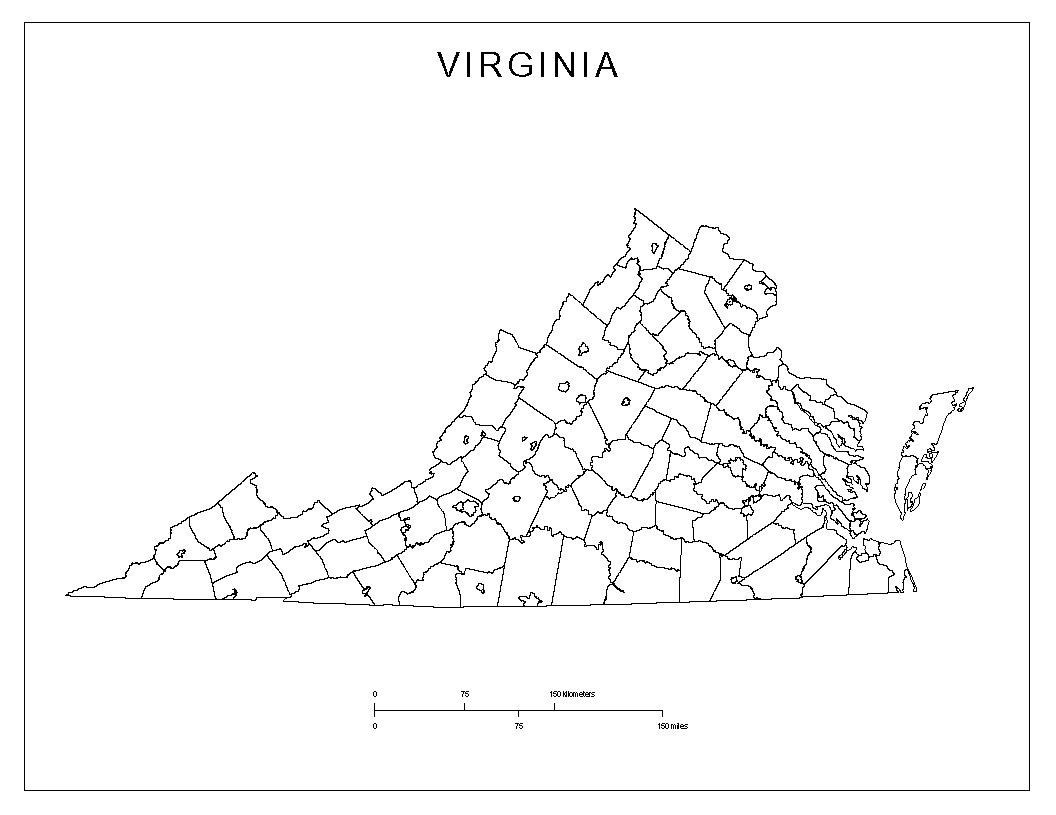
But then I got to thinking, what if I could create a visual that showed the various places of origin for my ancestors...in color!? Instead of colors for each state - since my ancestors are nearly entirely from Virginia into the 1700s - I figured I could focus on specific counties and cities in Virginia.

I searched the internet for a free simple family tree template until I found one that I liked. I settled on one particular chart because the boxes were blank and it allowed for 7 generations including a box for me. I downloaded the free chart as a pdf, took a screenshot to turn it into a jpg, and cropped the image.

I still didn't know how to fill in the blanks, though! Then I remembered that I have the Paint 3D app on my Dell. Using this program, I tried to color each box until I realized that would be a pain...and then discovered the fill tool. This allowed me - with a click of a button - to fill an entire box at once. Super easy!

I chose a color for each county my ancestors were born in, along with a few other states (Indiana, Pennsylvania, and New York) and Germany. 

Here is my color key:
Virginia Counties & Cities

Richmond City - blue
Powhatan - yellow
Dinwiddie - light blue
Norfolk City - green
Petersburg City; Prince George - orange
Halifax; Pittsylvania; Mecklenburg - purple
Charles City County - red
Chesterfield - dark red-brown
Brunswick - lime green
Lynchburg City; Nelson; Franklin - pink
Essex; King William - light grey
Cumberland - gold
Louisa - light red

Other localities & situations
Indiana - brown
Pennsylvania; New York - light brown
Germany - teal
Unsure of origin but known ancestors - tan
Brick wall/unknown ancestors - black

For my Indiana ancestors, some of their parents were from Pennsylvania and New York, but I didn't want to struggle finding a distinct enough color for only two people. There are also situations that needed to be specified - the unknown situations. For a few ancestors, I know their names but I have no direct evidence of where they were born (only where they lived). For two ancestors, I have yet to identify them for certain, so for now they are brick wall ancestors.

But wouldn't all of that look cool in one visual just for the State of Virginia?


How cool is that!? 

You'll notice that I used the same color for a few places. This was for two reasons. Two locations (Essex County and King William County) had only one ancestor born there. In the case of a maternal great-grandmother's side, Petersburg City and Prince George County, I thought it would be easier to keep them together. The same applied to Halifax, Mecklenburg, and Pittsylvania counties. My ancestors from those counties seemed to bounce back and forth between all three. The blank Virginia map that I used can be found here

But does this help any? Does this serve any real purpose - I mean, besides being cool!?

I think so, yes! It's not only a visually appealing tool to visualize my ancestral origins, it's also helpful to see trends and unexplained anomalies in my ancestry. 

Here are some examples:

The counties and city in pink are the origins of an ancestor who met a man who was studying at law school. Other counties, like those in light grey and light red are anomalies - they're outliers that I have yet to explain. How did those ancestors meet their spouses several counties over? I still don't know!

It also gives me a visual of trends in my family. While many of my ancestors stayed put for quite a while - most of them actually - some did migrate, to the East! My ancestors' westward migration must have occurred prior to the late 1700s because the trend in the mid 1800s was to move northeast closer to Richmond. 

One last thing I noticed - I'm much more from Halifax County (with a few ancestors passing through Pittsylvania and Mecklenburg) than I ever gave credit for! One quarter to be precise! I always knew that I had two great-grandfathers from Halifax (and they're somehow not related - that I can find so far!) but I had yet to have a visual to see it all laid out until now.

What had all begun as a passing glance at a few Facebook posts turned into a super helpful genealogical tool! I now have reason to research a few of my ancestors more specifically. I can also more confidently speak to the origins of my 4th great grandparents as a whole.

Oh! And before I forget; the top level in my ancestral chart - my 4th great grandparents - were born between 1745 and 1838. This huge range is due to several generations of older men begetting my ancestors on my fathers side, whereas there are several generations of young women giving birth to my maternal ancestors. 

Have you made a similar chart to visualize your ancestral origins in color? How could you use my methods described here to make new discoveries in your family?

My ancestors - and your ancestors - deserve the best researcher, the most passionate story-teller, and the dignity of being remembered. So let's keep encountering our ancestors through family history and remembering the past made present today!

Tuesday, February 25, 2020

Cracks in an Impossible Brick Wall


In family history research, there are days where we make great headway – like the stars suddenly align, and new branches of our tree just sprout out. But most of the time, we may feel stuck staring at our brick walls waiting for a brick to move.

In 2018 and 2019, I wrote about ways that I have been working on my Williams family brick wall: making sure I have a solid base of research with vital records and census records, then by using marriage and church records, descendancy and DNA research, and then combing personal property and land tax records. All of this gave me a much clearer image of the various Williamses living in Powhatan County, Virginia during the 1800s.

But there has remained this one problem: I still don’t know the identity of Joseph Williams’ father! So how do I make my staring-intently-at-the-brick-wall sessions more productive? What can I do besides wait for new DNA results to appear...or hope for a moment of genius to come over me?

1. Look at what you already know 

The first thing we want to do when looking at a problem we can't solve is to determine what you already know. Establish that first.

So in my case, what do I know already about Joseph Williams? I know that he was born about 1817 or 1818, probably in Powhatan County (based on the 1860 census). If he wasn’t born in Powhatan County, he lived there at least since 1838 when he first pays personal property taxes and marries Ona Ann Adams.

And though we have no explicit evidence about the parentage for Joseph Williams, there is some reason to suspect John Williams may be his father. As I wrote in my blog, Why Genealogists Ought to Love Taxes:

From 1832 - when the tax lists began listing numbers of men over 16 - until John Williams last appears in 1837, there are only four white Williams men listed by name in Powhatan County: John, George W, Henry, and James H Williams. Only John Williams lists more than one white male over 16 years of age during that time period, and he does so beginning in 1834.

Though no record states explicitly the name of Joseph’s father, there are other contemporaries of Joseph who do list their father as a John Williams. James H. Williams, at the time of his second marriage to Pauline Utley, lists his father as a John Williams. This James H. Williams – in both this marriage record and in census records – is recorded as being born in Amelia County. Lucy Williams, the daughter of John Williams, marries John Adams in 1832. John Adams was the brother of Ona Ann, the wife of Joseph Williams. John Williams, the son of John Williams married Martha Maxey in 1826 in Powhatan County. Are they all the children of the same John Williams?

And then there’s also what we can glean from autosomal DNA results. There are numerous descendants of James H. Williams who match several known descendants of Joseph Williams along with many of their known shared matches. So far, there haven’t been any other connections identified between these matches except for their descent from these two Williams men. Many of the shared matches between these two groups are also individuals descended from the Utley family from Goochland. James H. Williams married an Utley. Several Williams men married Utley women in Goochland in the early 1800s as well.

2. Y-DNA work 

Since I first wrote about my Joseph Williams Y-DNA mystery nearly a year and a half ago, a few more people have Y-DNA tested. And though my wall has not been broken down, I have reason to believe it might start to crack a little bit!

Match
Earliest Known Ancestor
GD* at 37
GD at 67
GD at 111
Markers tested
Z. Williams
unknown
1
1
3
111
R. D. Williams
Aaron Williams 1770 SC
1
-
-
37
B. E. Williams
Joseph Williams 1817 Powhatan, VA
1
1
-
67
B. B. Williams
Powell Williams 1735 Goochland, VA
2
-
-
37
J. C. Blackwell
Jesse Blackwell 1745 Goochland, VA
2
-
-
37
C. L. Blackwell
Jesse Blackwell 1745 Goochland, VA
2
2
-
67
M. R. Blackwell
Jesse Blackwell 1745 Goochland, VA
2
2
-
67

*GD – genetic distance: number of mutations or differences between two test takers

Since first buying a 37 marker Y-DNA test, I upgraded my father’s Y-DNA test to a 67 and most recently to a 111 marker test. In doing so, it has given me more clarity as to how closely he actually matches his closest matches. Unfortunately, only 4 of his closest 7 matches at the 37 marker level have upgraded to 67 markers, and only one of those has tested all the way up to 111 markers. More frustrating still is that Z. Williams, his closest match at the 111 level, has not listed his earliest known ancestor.

The next match, R. D. Williams, is descended from Aaron Williams of Georgia who was born in South Carolina. Though this is nearly as frustrating in its distance from Powhatan County, Virginia, it was a relief to see a Williams match after so long of only seeing a hodge-podge of other surnames. B. E. Williams is my father’s second cousin; these Y-DNA results, along with sharing an expected amount of autosomal DNA between them confirms their descent from the same Williams man.

More recently, I contacted another Williams man, descended from Powell Williams. Powell Williams lived in both Powhatan and Goochland counties in the early 1800s and was a contemporary of Joseph Williams. I had kept my eye on his records, always curious how the two might be related. And happily, this descendant of Powell’s matches my father’s Y-DNA! Eureka!

The remaining three matches in the table, Blackwell men, all descend from Jesse Blackwell of Goochland County. But how do Jesse Blackwell, Joseph Williams, and Powell Williams connect?

3. Trip to Goochland Courthouse 

Before heading to Goochland County – the county immediately north of Powhatan – I wanted to find as much as I could about Powell Williams. I found him in several chancery cases, confirming names of his siblings (Edward and Samuel), a son George W. Williams, and that his father was also named Powell Williams.

Descendants of Jesse Blackwell had told me that he was born out of wedlock to his mother Anne but I had never viewed his records at the courthouse. So I decided to view Jesse’s record myself, and see what I might also find out about Powell Williams, Sr. This took me to the order books for Goochland County.


“Jesse the son of Anne Blackwell is ordered to be bound by the church wardens of Saint James Northam Parish according to law unto John Harris.” – June Court 1755

So here we have the confirmation that Jesse was the son of Anne Blackwell. It doesn’t name his father. Was he born out of wedlock? Perhaps to a Williams man from Goochland?


 “Ordered that the church wardens of St. James Northam Parish do bind Powel [sic] Williams an orphan boy unto Jeremiah Whitney a taylor [sic] according to law.” February Court 1744

Powell Williams was an orphan! But of whom?

These two records – from 1744 and 1755 – were both from St. James Northam Parish which falls in modern Goochland County. So we know that Jesse was born out of wedlock and Powell became an orphan in a similar time period. But how were they related? What's interesting is that Aaron Williams of Georgia had a son named Powell. Could it be a family name?

4. Orphans and Bastards 

This is where I’m getting a tad more hopeful that I can find out more about our Powell Williams and Jesse Blackwell. They have slightly unusual names, and now they’re getting involved in the courts by being bound out. That means we have a paper trail, y’all! Paper trail means records!

But to understand any of the paper trail, we need to know how the law affected our story.

Early America – as with modern America – was concerned about who was going to have to take care of the poor. Is it on the state, the Church, or the common man? If a person was too poor to take care of their children, it would become the duty of the Church (later the State) to take care of the poor children. They would be bound out to someone who could teach them a trade, or at least teach them Christian faith and morals.

The laws concerning orphans and bastard cases evolved over time – beginning in the 1600s but come from English law. These laws include the punishment for a woman who has a bastard child (a child out of wedlock), and the punishment for a bastard child born from a black or mulatto man. Laws concern servant women who have children out of wedlock. There are laws for how often a guardian would need to report back to the county government regarding the property that was entrusted to them for the child bounded to them. There are laws for a lot of situations!

The wonderful Kelly McMahon Willette recently taught a session at the Virginia Beach Genealogical Society on working with cases of unknown parentage, specifically with bastard cases. What I learned that night - and what I'm super excited to put into action in my research - is to check the index in the order books for "presentment" or "grand jury." Often the orphans or bastards are not listed by name in the index. Pro tip from Kelly!

To read some of the laws yourself - especially relating the time before and immediately after our Jesse Blackwell and Powell Williams, you can search the Hening's Statutes at Large for Virginia Laws. Some worth perusing are the following: 1656, 1691, 1705, 1727, 1748, and 1769.

Here are some resources relating to orphans and the illegitimate:
- Orphans' Courts in Colonial Virginia - Evelyn McNeill Thomas
- The Difference: Apprenticed or bound out - Judy G. Russell
- Illegitimacy in the United States - the FamilySearch wiki
- Researching Orphan Children and Adoption in Your Genealogy - Sunny Jane Morton and Judy G. Russell

*****

My Williams mystery still eludes me. But I have made some progress by looking at what I already know, processing what I learned from updates to Y-DNA results, taking a trip to the courthouse, and by looking at Virginia laws relating to orphan and bastard cases. Genealogy is a process of continual education. As we research, as we process and write, we get greater clarity that can help us put cracks in our seemingly impossible brick walls.

What is keeping you from solving your "impossible" brick wall mystery? How might you make new discoveries if you take a look at your problem from a different perspective?

This post was inspired by the week 29 prompt "Challenging" of the 2019 series by Amy Johnson Crow's 52 Ancestors in 52 Weeks that I'm finishing up in 2020.

My ancestors - and your ancestors - deserve the best researcher, the most passionate story-teller, and the dignity of being remembered. So let's keep encountering our ancestors through family history and remembering the past made present today!

Photo by Victor Garcia on Unsplash

Let's Connect at NGS 2022!

The National Genealogical Society Family History Conference is back in person this year! And y'all I am so ready to meet face-to-face!...